

Issue 33: The Russian Pavilion
"…in the listening zone tuned in to a lower frequency…"
The Unlikely Guide un-stacks the Venetian lagoon every week and celebrates it in all its complexity. It’s a declaration of love to the local people, to the fish, the artichokes, to the Lido, to Murano, to Sant’Erasmo, and to the mud. It is composed under various headlines and features science fiction, fiction, Biennale reports, and the History Channel with stories and myths from the lagoon.
Here we go, Number 33:
When the House Burns Down
It’s dogged. First there’s a break, then two issues, then nothing again. When you write every week, you’re in the flow. You’re constantly thinking about it, discarding ideas, rethinking them. When the regularity is gone, other things take over. Besides, the world is becoming increasingly bewildering. And darker. It’s pretty tough to just whip up a funny piece of writing on the fly. And Science Fiction? Forget it. When the future is already here? When AI agents have their own social media and make fun of humans? Something’s gone wrong with the future.
BUT sometimes you get a free kick. Out of nowhere. Like last week, when Pietrangelo Buttafuoco, the Biennale president we already featured in ISSUE 30, gave a completely ridiculous interview to La Repubblica. The day before, Russia had announced that it would be exhibiting in the Giardini again this year. With Alexander Dugin as curator. No, that’s not quite right. But almost.
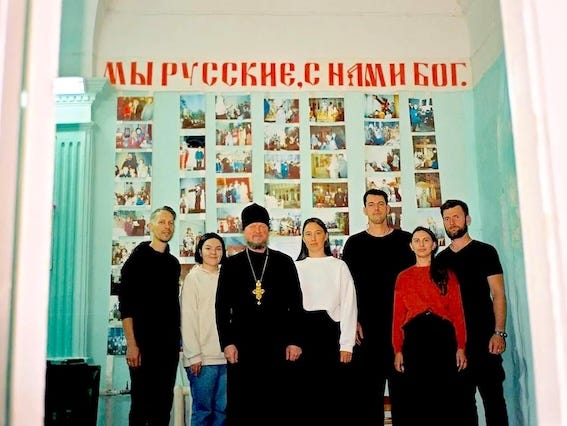
We can look forward to pro-government Russian folklorists Toloka and many more outspoken supporters of the so-called military special operation—that is, the WAR against Ukraine. And DJ Diaki from Mali is coming. (This is the country that the Wagner Group pretty much destroyed.) “A music festival brought to life,” serving as a “space for dialogue and exchange.” How wonderful!
In 2022, Kirill Savchenkov and Alexandra Sukhareva canceled their pavilion participation in protest against the INVASION of Ukraine. Back then the Biennale released a statement, welcoming the decision and condemning “all those who use violence to prevent dialogue and peace.”
Now, in the Buttafuoco era and the fifth year of the WAR that no longer applies. It’s actually like his first art biennale; “La mia Biennale sarà la vera tregua” is the title of his talk in La Repubblica, “My Biennale will be the real respite.” His biennale. The curator, Koyo Kouoh, as we mentioned in the last stack, tragically died. It seems as if Mr Buttafuoco has now also taken over her job. And he loves it. When asked whether the Minister of Culture in Rome, Alessandro Giuli, knew about the Russians coming, he replied: “Yes, and we are in constant dialogue with the minister. I allow myself to bring him sunny souvenirs, for example from Mongolia. And we are, after all, two readers of René Guénon. We are very clear about The Kingdom of Quantity and The Signs of the Times.” So, two aesthetes exchanging views on the über-traditionalist Guénon. It’s likely that the two fascist mystics frequently see each other on Zoom calls with Alexander Dugin. What on earth are ‘sunny souvenirs from Mongolia’? Dodgy code?
René Guénon (later Abdel Wahid Yahia) is also a huge influence on Steve Bannon. Especially his apocalyptic view of history. For Guénon, the destruction of the Knights Templar and the Peace of Westphalia marked the beginning of the West’s spiritual decline. Got it? More on Buttafuoco and the traditionalists here in ISSUE 30.
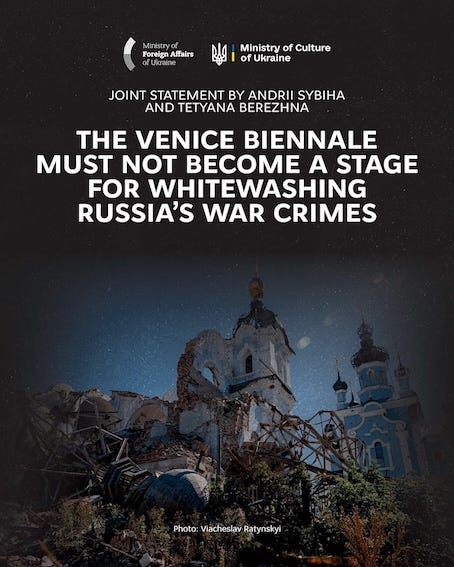
But then some MEPs and art world figures organized the usual petition drive, and two days later, the Italian Minister of Culture claimed to have always been against inviting Russia. Mr Buttafuoco stuck to his guns. Maximum attention, maximum disruption! Despite writing about the In Minor Keys Biennale: “As the world turns up the volume and voices distort in the din – to the point of all meaning being obscured – there remains only one way to communicate: by creating a listening zone tuned in to a lower frequency. More intimate, welcoming, human, but no less charismatic.” Mr Buttafuoco is a member of the fascist Lega Nord, Matteo Salvini’s party. And they are known for being exactly that: “…More intimate, welcoming, human…”
In 2018, (yes, before that WAR) the Biennale president declared that Putin was “the only true right-wing statesman” in the world. He calls all that now in La Repubblica “diplomacy of beauty,” which would reflect Venice’s unique history.
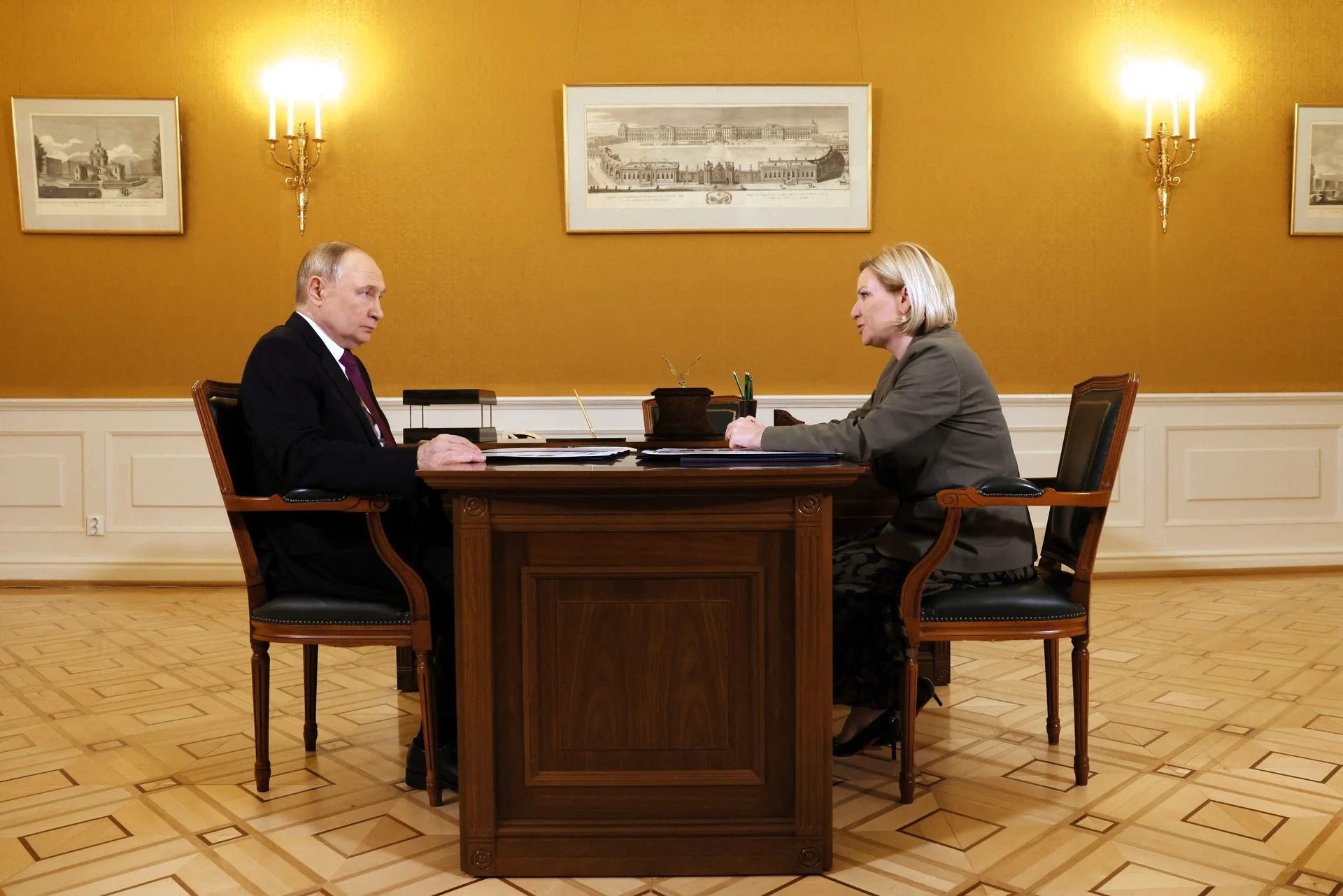
Another day later, this must have been last Friday, the philosopher and former mayor of Venice, Massimo Cacciari (ISSUE 29), apparently came to President Buttafuoco’s defense. Also in La Repubblica. Art is free, he said. But then comes the kicker: a political assessment would only be possible after the artworks had been shown. If there was any war propaganda among them, then it could be criticized and action taken. With this lineup, things aren’t looking good for the president. Take Anastasia Karneeva, for example, the commissioner of the Russian pavilion. Ms Karneeva is the daughter of Nikolai Volobuev, a retired general and deputy director of the giant arms manufacturer Rostec. Between 1975 and 2004, he worked for the KGB and FSB. Karneeva herself founded the art consultancy Smart Art in 2014 together with Ekaterina Vinokurova, the daughter of Russian Foreign Minister Sergey Lavrov. Ms Karneeva now also has a company that belongs to the Rostec empire.

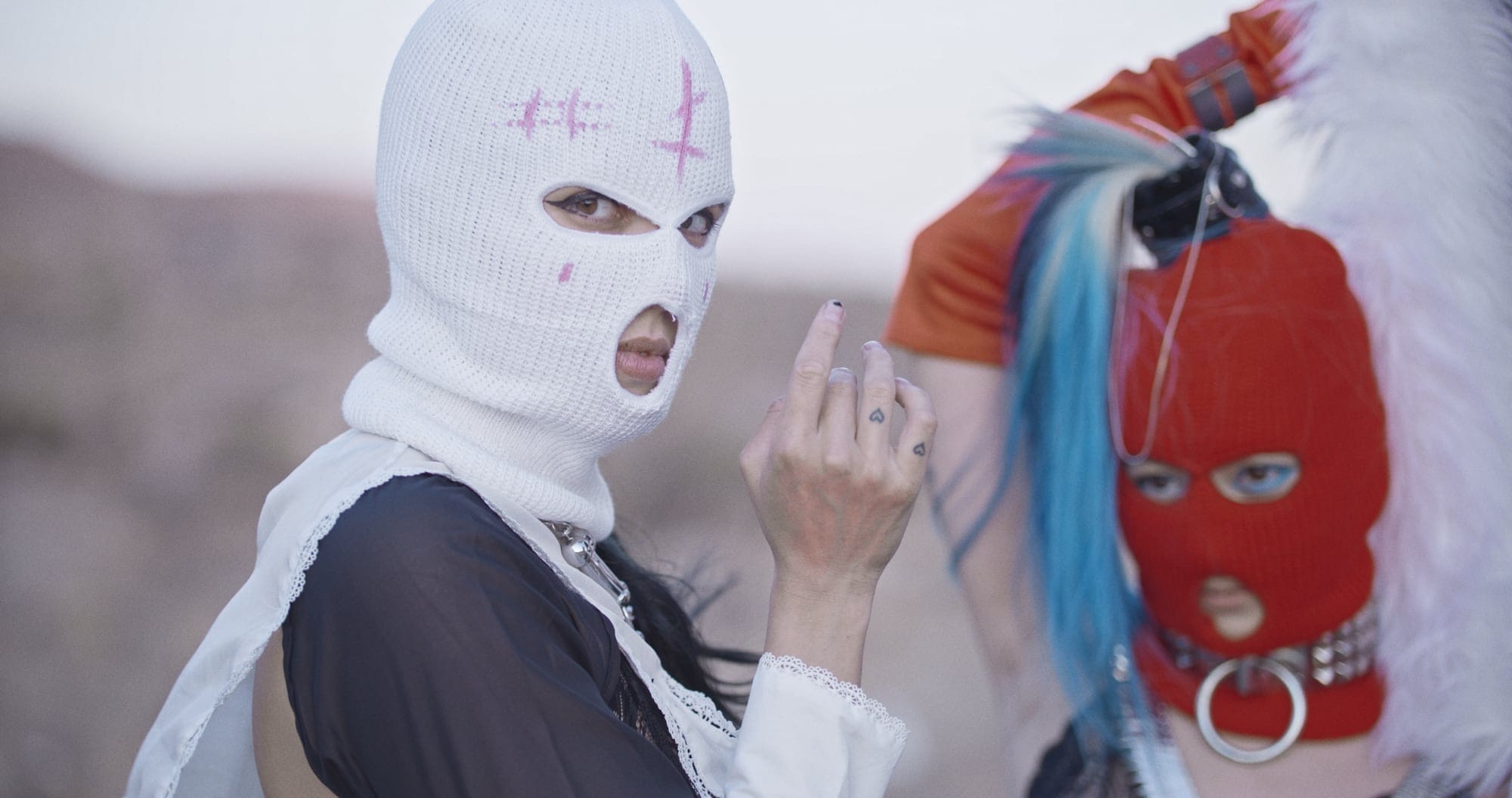
President Buttafuoco maneuvered himself into a mess. Perhaps he will soon become the FIFA boss. Anastasia Karneeva has been approached for comment (not by us, obviously). To turn up the volume: Nadya Tolokonnikova from Pussy Riot has announced that they will perform in Venice in protest against Russia’s return. Very, very, very good.
The title of the 2026 Russian contribution is: The Tree Is Rooted in the Sky, and comes from Gravity and Grace (La Pesanteur et la grâce) by the French anti-fascist mystic Simone Weil: “It is only from the light which streams constantly from heaven that a tree can derive the energy to strike its roots deep into the soil. The tree is in fact rooted in the sky.” For the philosopher, activist, and radical moral thinker, Gravity were the natural forces that pull the soul downward. Like Necessity, Ego, and Power. While Grace, in her paradoxical metaphor, was the divine light that comes from beyond the world.
The Italian philosopher Giorgio Agamben called Ms. Weil ‘the clearest conscience of our time.’ And he completed his law degree with a thesis on her.
Giorgio Agamben was a professor of aesthetics here at the Facoltà di Design e Arti della IUAV for many years and has written quite a bit about Venice. For example, in the late 2000s, the beautiful essay: On The Uses and Disadvantages of Living Among Specters. Manfredo Tafuri’s description of Venice as a kind of historical ‘corpse’ is his starting point and he argues that European cities and traditions live on as ‘specters’. As traces or signs left behind in history.
When the House Burns Down is the beautiful title of a book by Mr Agamben, published in Italian in 2020, Quando la casa brucia, by Giometti & Antonello, Macerata. In English in 2022 by Seagull Books, and in German in 2025 by Merve as Wenn das Haus brennt. It’s a philosophical and poetic reflection on some of the crises of our time. Including the Covid era. Of course. 2020… But wait! We know, Mr Agamben was anti-vaxxer, anti-state (always ever was) and anti-masks. Sure this is in the text, and (not but) it’s a very beautiful, very profound, and enchanting book. No mumbling justifications. As always a little enigmatic, and he invites us to sit with him on a mountain top and look down on a world that is destroying itself in a frenzy of madness. The crisis of experience. Lives exposed by a lack of experience. Doors and Thresholds. Language, of course, language! Contemporaneity. Being a witness. And testimony. The book reads like a summary of Giorgio Agamben’s work. This is the beginning:
“’Tutto quello che faccio non ha senso, se la casa brucia’. Eppure proprio mentre la casa brucia occorre continuare come sempre, fare tutto con cura e precisione, forse ancora più studiosamente - anche se nessuno dovesse accorgersene.”
“’There is no sense in anything I do, if the house burns down.’ And yet it is exactly while the house is burning that one must carry on as always, must do everything with care and precision, perhaps even more diligently—even if no one notices.”
When the House Burns Down is also about war. The fire is war. Not the WAR, but war. Agamben asks in the book when the fire started: “Da guanto tempo la casa brucia? Da quanto tempo è bruciata? Certamente un secolo fa, fra il 1914 e il 1918, qualcosa è avvenuto in Europa che ha gettato nelle fiamme e nella follia tutto quello che sembrava restare di integro e vivo;…” “…between 1914 and 1918, something happened in Europe that threw everything that still seemed whole and alive into the flames and into madness; then, once again, thirty years later, the blaze broke out everywhere and since then has not ceased to burn, without pause, quietly, barely visible below the ashes.”
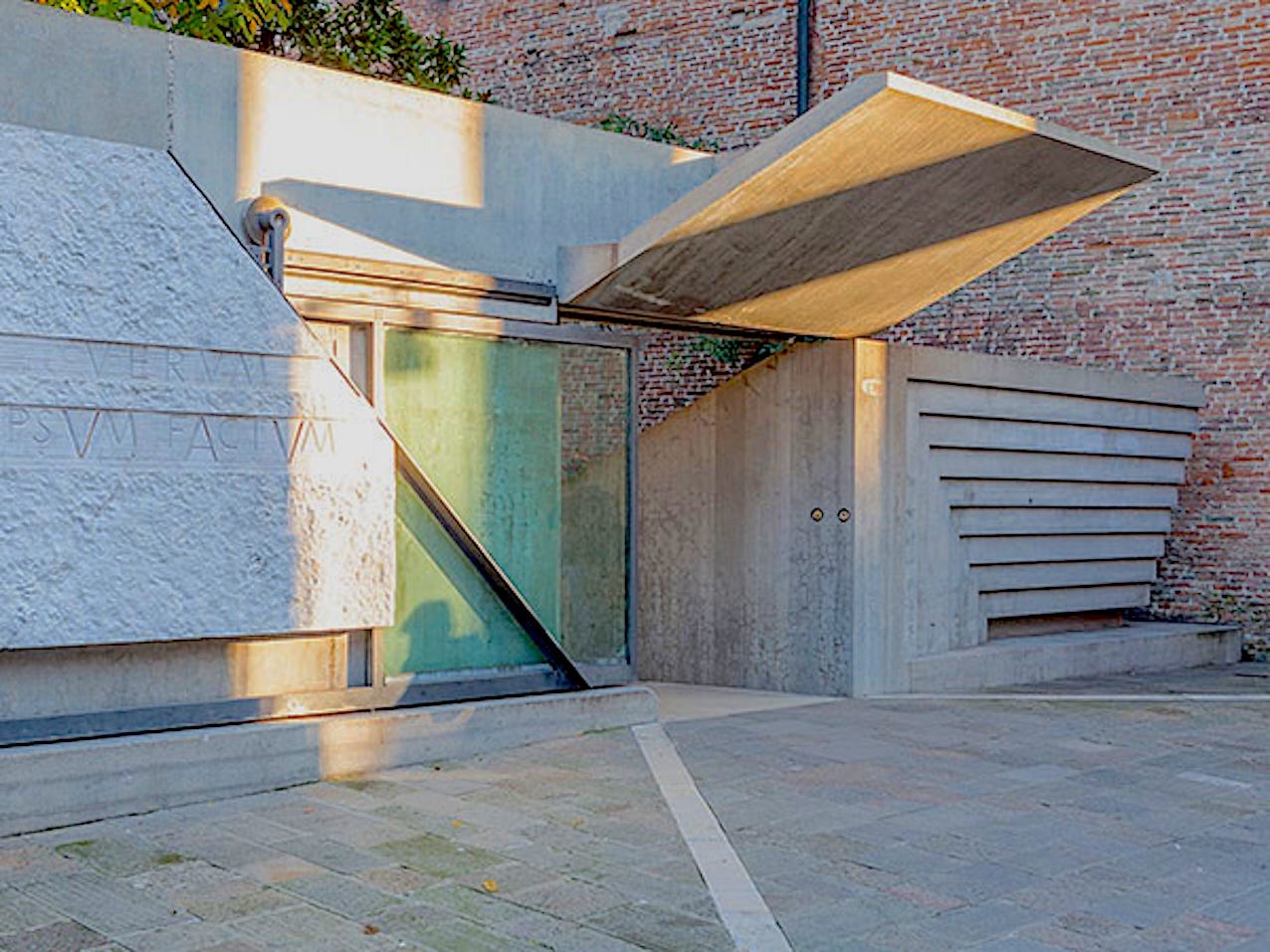
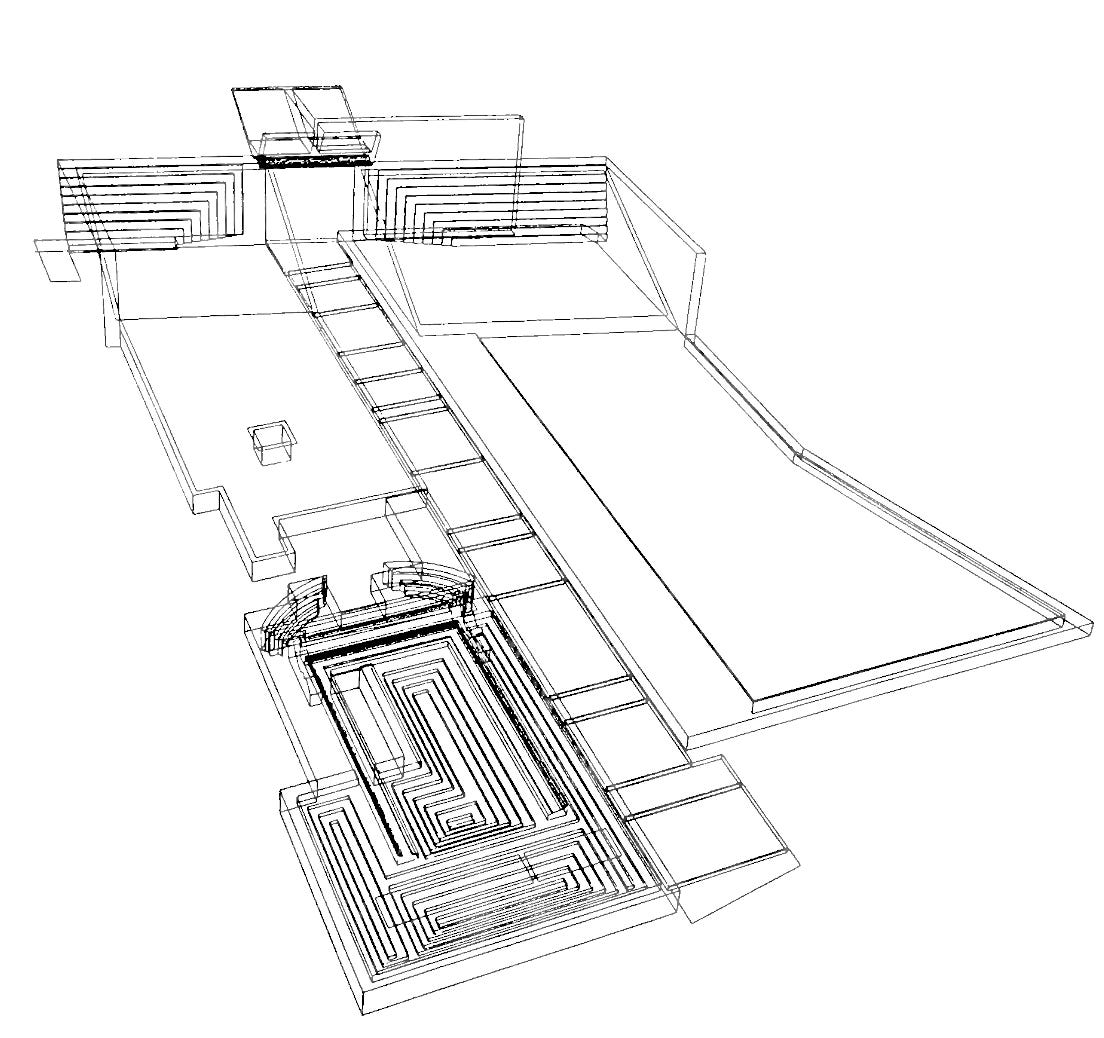
The great second chapter, Door and Threshold, deals with Carlo Scarpa’s design for the entrance to the Istituto Universitario di Architettura di Venezia (IUAV), which was commissioned in the 1960s. This is the place where Mr Agamben later taught. Mr Scarpa was to use an Istrian stone door that had been rediscovered during the restoration of the Convento dei Tolentini and he decided to lay this Istrian door flat on the ground. And fill it with water.
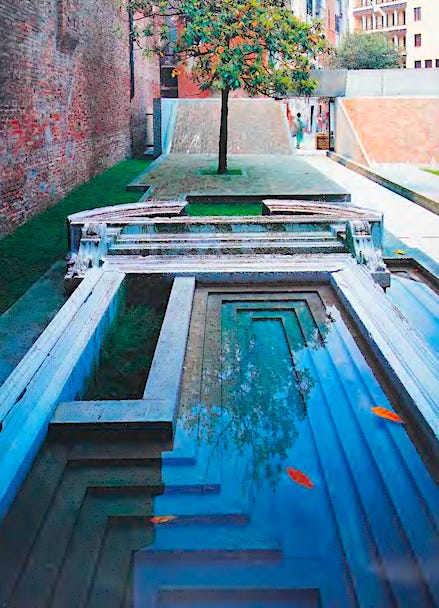
…it can never be closed. (Moreover, Venice—of which Scarpa’s door is, perhaps, something like an invocation—has no need of city gates: to enter it one has to cross a threshold which is the water of the lagoon, just as to get to the submersed door one has to set foot in the water)”
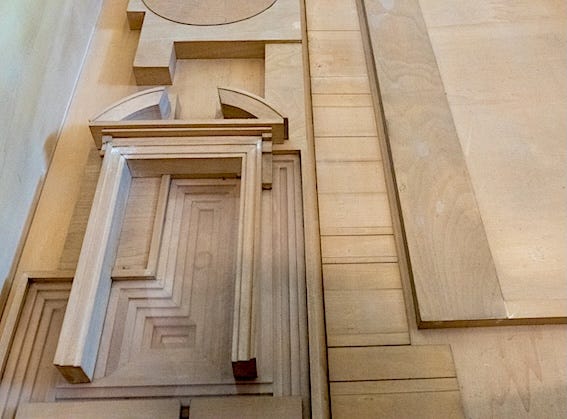
…which only in the case of foris seems to acquire the meaning of a separation between what is inside (included) and what is outside (excluded). The decisive point, however, is that the idea of an ‘outside [fuori]’ is expressed with a term that literally means ‘at the door’ (foris, foras). The ‘outside’ is not another space cleanly separated from the inside by a border:…
Mr Buttafuoco says that Venice has always been a place where people meet. Right. The Biennale therefore has a kind of ‘foreign policy role.’ Right!
And we really hope it will be “..More intimate, welcoming, human...”
The third chapter of Giorgio Agamben’s book is about the contemporary. In his view it doesn’t just mean being present in one’s time. Or keeping up to date. You can be present and still have no clue of the present. Being contemporary means being alert and being a witness. Sounds very Simone Weil: Attention. And grace. Making Space. She went to Spain in 1936, to fight the fascists in the Civil War. Political transformation not through power but a change in how we perceive reality.
In 1940, Simone Weil began writing Venise sauvée (Venice Saved) a tragedy in three acts: The city is threatened by a plot of Spanish mercenaries to overthrow the Republic of Venice in 1618. But saved by one of the conspirators, Jaffier, who, seized by its beauty, cannot bring himself to take it by force.
Like many of Ms Weil’s writings, it is rarely read because her early death in 1943, interrupted its completion.
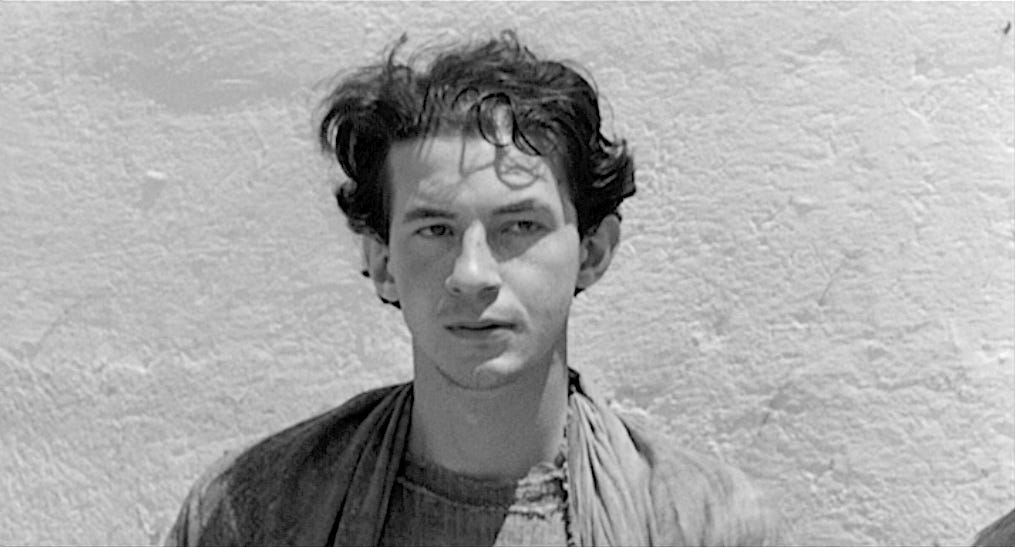
In 1963, while studying law and perhaps writing his thesis on Simone Weil, Giorgio Agamben played the apostle Philippus in Pier Paolo Pasolini’s The Gospel According to St. Matthew.
Ciao ragazzi, see you soon, hopefully next week. With #34.
And remember: Even when the house is on fire, you have to carry on as usual.